


News
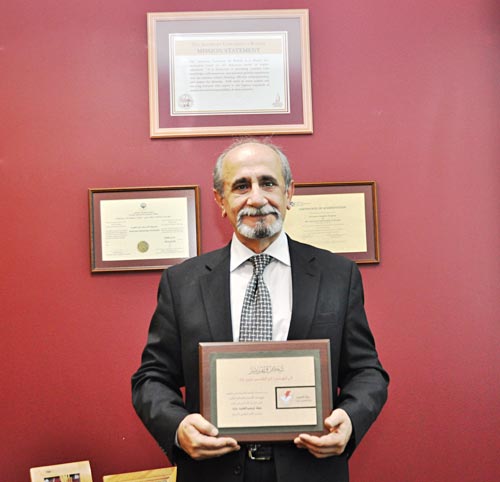
For the fourth consecutive year, the American University of Kuwait (AUK) receives the Ministry of Electricity and Water (MEW) Award for Energy Conservation. AUK has been receiving MEW awards since 2008 on their collaborative efforts with the ministry on energy conservation.
The MEW relationship with AUK started when a team of ministry representatives visited the AUK campus in 2007 to inspect and provide advice on their energy conservation campaign. The visitors were impressed by how the Campus Services Department at AUK had already been applying energy conservation practices including, using light-emitting diodes, noise-absorbing windows, and smart power strips on all electronic equipment.
In continuation of its energy conservation efforts, the campus services Department at AUK maintains collaboration with MEW by sharing experience, data, and information on energy conservation methods.
Released by the Office of Public Affairs on the 21st March 2012
Photography by the Office of Public Affairs (C) 2012
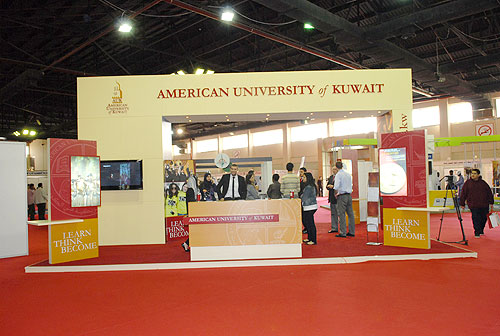
For the 8th consecutive year, the American University of Kuwait (AUK) is participating as a sponsor and exhibitor in EDUCARE 2012. The annual education and career development exhibition was held at the Mishref Kuwait International Fair (KIF) fairgrounds from March 12-15, 2012.
The AUK booth at EDUCARE was a point of attraction to a wide range of visitors including, recent school graduates, parents, young professionals, as well as local media. AUK President, Dr. Winfred Thompson, the Vice President for Administrative and Student Affairs, Dr. Carol Ross-Scott and Assistant to the President for Admissions and Public Affairs Amal Al-Binali were present at the event to welcome Dr. Khalid Al-Saad, Undersecretary of the Ministry of Higher Education, who inaugurated the exhibition on behalf of the Minister of Education & Higher Education.
The AUK Admissions team was also present to meet with prospective students and visitors. The team exchanged conversations with visitors and responded to inquiries about the admissions process, campus life, and the different academic programs available at the University. In addition, representatives from the Center for Continuing Education (CCE) at AUK talked to visitors about the extensive catalog of courses and programs the Center offers.
The exhibition was a good opportunity to highlight AUKâs main achievements this year, including, the accreditation of its Business and Economics Division by the Accreditation Council for Business Schools and Programs (ACBSP); as well as, the accreditation of its Arts and Humanities Division, Social Sciences Division, and General Education Program by The American Academy for Liberal Education's (AALE).
Currently, the University offers the following degree programs:
Bachelor of Business Administration (BBA) in: Accounting, Finance, Marketing, Economics, and Management.
Bachelor of Arts (BA) in: Communication and Media, English, Graphic Design, International Studies, and Social and Behavioral Sciences.
Bachelor of Science (BS) in: Computer Science, Information Systems.
Bachelor of Engineering (BE) in: Computer Engineering.
In addition, the Intensive English Program (IEP) at AUK offers courses that are designed to prepare non-native English speakers for the academic tasks required of them in their first and successive years of university education.
Released by the Office of Public Affairs on the 19th March 2012
Photography by the Office of Public Affairs (C) 2012
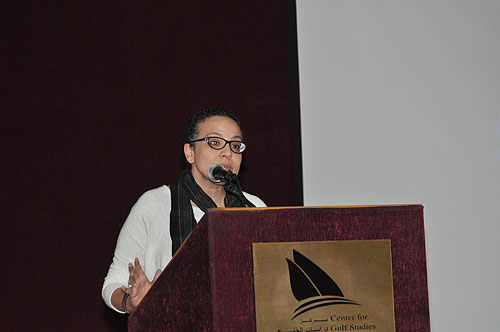
The Center for Gulf Studies (CGS) at The American University of Kuwait (AUK) presented a screening of the documentary film "When the People Spoke - Part One" which was produced and directed by Mr. Amer Al Zuhair. The screening took place in the AUK Auditorium and attracted a number of visitors.
The film documents the evolution of women's rights in Kuwait and the role of women in society throughout Kuwait's history. It sheds light on the debate between elements of society that were striving for gender equality in the country, and the more conservative elements who argued that women's participation should be restricted. This culminated in a nation-wide movement in 2005 that ultimately resulted in Kuwaiti women attaining the right to vote and run for Parliament.
The event concluded with Mr. Al Zuhair being joined by women's rights activist Ms. Fatma Hayat and CGS Director Dr. Farah Al-Nakib in exchanging an open discussion with the audience. Recurring points raised during the discussion centered on the major challenges facing women's rights in Kuwait today, and the underlying causes and implications of having no women elected to Parliament in the 2012 elections.
The Center for Gulf Studies (CGS) at the American University of Kuwait is a research center that aims to promote greater cultural understanding of and increased intellectual interest in the Gulf by facilitating free and open academic discourse on a range of issues that both shape and challenge this critical region of the world. The goal of CGS is to enable scholars as well as political and civil society actors both within and outside the region to contribute and add value to the burgeoning field of Gulf Studies, while at the same time informing and engaging the general public. To this end, the CGS encourages, supports, and cultivates interesting and original research on the Gulf, while regularly organizing a variety of public academic events such as lectures, roundtable discussions, and conferences.
Released by the Office of Public Affairs on the 19th March 2012
Photography by the Office of Public Affairs (C) 2012
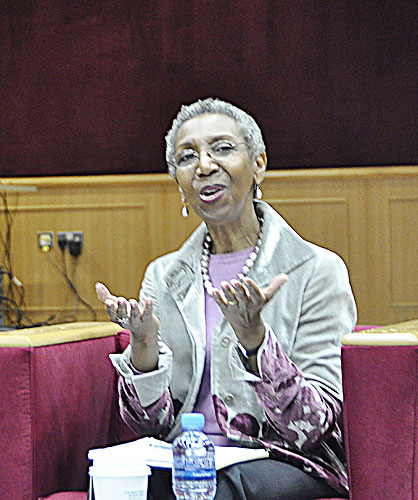
As part of her visit to the GCC, Dr. Gwendolyn J. Dungy, the Executive Director of NASPA (Student Affairs Administrators in Higher Education), had the chance to visit and tour the AUK campus. The tour was conducted by AUK student Omar Mehdi, who participated in the NASPA Undergraduate Fellows Program (NUFP) in 2010-11 and was the first fellow outside of North America.
During her visit, Dr. Dungy met with various administrators and staff and gave a presentation with a group discussion on Student Affairs Professionals: Serving Students, & Building the Profession. The session was followed by a lunch for attendees to further foster dialogue and exchange. Individuals from other institutions of higher learning in Kuwait were invited to attend. Commenting on her visit, Dr. Dungy said that "meeting the staff was truly enlightening" and that "during the open sessions, there were some good exchanges and much food for thought on all sides."
NASPA is a leading association for the advancement and sustainability of the student affairs profession. Dr. Dungy has served as the Executive Director of NASPA since 1995 and is a respected educator as well as an accomplished leader and speaker. Dr. Dungy was in the GCC attending the GULF regional NASPA-ACPA conference in Qatar where she served as a panelist and as part of her visit to the region she visited institutions in Qatar, UAE, and at AUK in Kuwait.
NASPA Undergraduate Fellows Program (NUFP) includes yearlong mentoring and career exploration in partnership with an AUK Student Affairs professional, attendance at the annual NASPA conference, and participating in a summer internship program at another college or university. Current AUK student Raghda El-Deeb has also been accepted into the current NUFP program and had a unique opportunity to meet with Dr. Dungy during her visit to the AUK campus.
For more information about NASPA and to learn more about the student affairs profession please check out the following link www.naspa.org.
Released by the Office of Public Affairs on the 13th March 2012
Photography by the Office of Public Affairs (C) 2012
As a part of the national week celebrations that took place at AUK, the Transitional Student Government Association (TSGA) held a range of events on campus. The highlights of the week included a football tournament and an award ceremony for creative Kuwaiti minds.
The one-week football tournament, which took place at the AUK soccer filed, included teams resembling the most popular Kuwaiti football teams. The participating students played for their most favorite teams. The final was between Al Salmiya and Al Arabi, with Al Salmiya winning an emphatic 9-2 victory. The winners received trophies and medals.
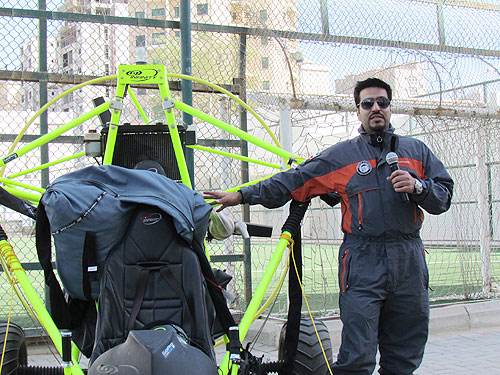
On the 21st of February TSGA held an appreciation ceremony to shed light on special achievements and success stories from within the Kuwaiti society. The ceremony hosted shooters Sarah and Shahad Al-Hawal, Duelist Tarek Al-Qalaf, the Kuwait Aviation Team, and Pro Rider team, who gave short speeches and answered questions about their main achievements. The event ended with an award ceremony, followed by a traditional Kuwaiti lunch.
The AUK Student Government Association (SGA) is a student organization representing the AUK student body. Composed of elected representatives from the student population, SGA is responsible for representing the opinions, concerns, and recommended resolutions of the student body to other constituencies of the AUK community. In addition to serving as the student voice, SGA works with other student organizations to sponsor events that promote the academic and social lives of students at AUK. Students can get involved with SGA by running for an elected position in SGA, participation in a General Assembly, SGA committees or as an SGA volunteer.
Released by the Office of Public Affairs on the 8th March 2012
Photography by the Office of Public Affairs (C) 2012
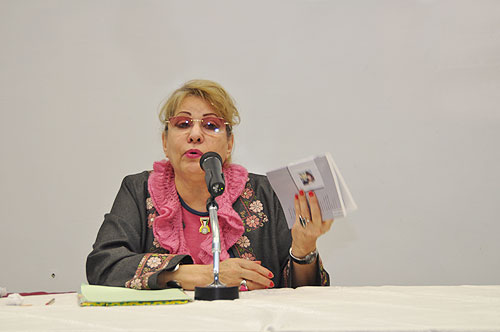
The Arabic Literature Club at the American University of Kuwait (AUK) organized a lecture and open discussion on "The Novel and Story in Kuwait" on February 28th. The event hosted the renowned writer and novelist Layla Al-Othman, who talked about her long experience in the world of literature. The lecture was followed by an award ceremony for the writer.
Known for tackling controversial political and social issues, Al-Othman wrote a number of stories and novels that have been translated into other languages. Her novel "Waseema Comes Out of the Sea" was selected as one of the best hundred Arab novels in the 20th century. In 2004, Al-Othman launched her literary award "Layla Al-Othman Award for Youth Innovations in Story and Novel". The award goes every two years to creative literary works by Kuwaiti youth.
Al Othman's first encounter with literature started with her journalistic career in 1965. She became keen to develop her writing skills despite the educational barriers she faced after being deprived of university education. "Seeing all these young people interested in education compensates the joy I missed when I was deprived of university education." Al Othman said at the beginning of her talk, which attracted many students, professors, and external visitors. "It is my honor to be among you, lecturing for the third time at AUK", Al Othman addressed the audience.
Speaking about the art of story making, Al Othman described writing like "an engineering design process that involves interconnected grids and threads contributing to an artistically comprehensive plan". Connecting story characters to time and place, adding dramatic elements, and putting all this into an interesting context is the recipe of a good story. Al Othman thinks that many stories nowadays lack these essential elements that make a good literary work.
About the history of story writing, Al Othman said that the story started thousands of years ago in the Arab region. The Qur'an stories, the old arabian legends, the Thousand and One Nights, and a lot of other works have been translated by the west and developed into the well-known classics we read today.
According to Al Othman, stories can be classified into short stories ranging from 2-10 lines; traditional stories composed of 4-5 pages; or long stories that are slightly shorter than novels. Stories also vary in their content and style. There are fantasy stories, historical stories, true stories, philosophical stories, surrealistic stories, or poetic romantic stories. In all these types, Al Othman thinks that, meaningful content coupled with entertainment elements are very important to grab the interest of today's selective reader.
The event ended by an open discussion, where the writer shared her hopes, fears and worries with the audience. When asked why her stories always revolve around her life experiences, Al Othman answered that story ideas are normally triggered through feelings or situations that the writer lives. She believes that her life was full of difficult circumstances that make good learning lessons to the readers.
The Arabic Literature Club at the American University of Kuwait, currently lead by Maryam Fadhl, is a student organization interested in different aspects of the Arabic language and culture such as Arabic poetry and literature. The main purpose of the Club is to reveal the Arab identity and practice Arabic language at AUK. Most of the club events currently focus on Arabic literature and poetry. The Arabic Club aims to host more cultural events that would include Arabic music and hosting of famous experts in the Arabic language to share their experience and thoughts with the students. All events hosted by the Arabic Club are being done in association with the Arabic Department at AUK.
Released by the Office of Public Affairs on the 4th March 2012
Photography by the Office of Public Affairs (C) 2012
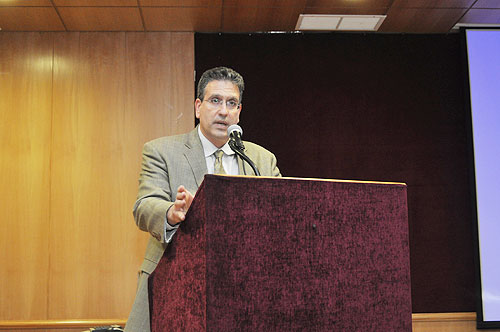
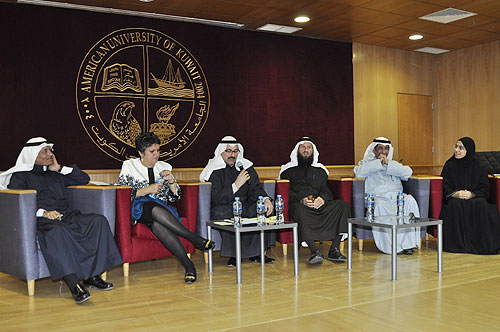
A panel discussion entitled "Degrees of Belonging in Kuwait" was held at the American University of Kuwait (AUK) on February 22. The panel discussion was co-organized by the Social and Behavioral Sciences Program (SBSA) and the Human Rights Club.
The panel discussion, which was sponsored by the Center for Gulf Studies (CGS) at AUK, tackled questions pertaining to levels of citizenship, gender inequality in cases of Kuwaiti women married to non-Kuwaitis, national identity, and statelessness. The panel, consisted of four guest speakers; Dr. Ibtihal Al-Khatib, Assistant Professor of English and Literature at Kuwait University; Ms. Rania Al Nakib, M.Ed, and Ph.D. Candidate at the Institute of Education, University of London; Dr. Mohammad Al-Wuhaib, Assistant Professor of Philosophy at Kuwait University and also the Director of the Kuwait Center for Active Citizens; and Dr. Ghanim Al-Najjar, Professor of Political Science at Kuwait University and Board Member of the Arab Human Rights Fund.
During his speech, Al- Wahaib discussed the historical and social context of citizenship in Kuwait pointing to the way Arab States were carved out of European and Ottoman colonial the needs and Arab identities formed from post-colonial nation-making efforts. According to Al- Wahaib, the colonial history created totalitarian regimes that often identified the country's name with that of the ruling families, such as in the case of Saudi Arabia.
Al-Nakib, who is conducting research on civic education curriculum in Kuwaiti government schools, spoke of how education modules in Kuwait conflate citizenship with national identity. According to Al-Nakib, belonging and participation in the Kuwaiti society is usually associated with adult Muslim males of origin, leaving out women, young adults, Christian Kuwaitis, or Kuwaitis who do not to reveal their religious affiliations. Al- Nakib also talked about the limitations and challenges faced by teachers conducting classes about this issue.
Reinforcing the research findings of Ms. Al-Nakib's, Al-Najjar spoke of his experience with the Human Rights curriculum, which he worked on developing, and how it had been politicized and Islamized. In his own point of view, belonging and citizenship should never be equated because a person could belong without having citizenship and vice versa. Referring to his comparative analysis on identity and conflict in Somalia, Iraq and Kuwait, Al-Najjar argued that the case of Kuwait is less complex than those other countries. Al-Najjar also explained how fear of loss of status permeates Kuwaiti society and how the government contributed to that fear.
From a human rights perspective, Al-Khatib focused on how Kuwaiti women are treated as second class citizens because of the patriarchal way of passing citizenship to offspring, which deprives children of Kuwaiti women married to non-Kuwaitis from receiving citizenship. Al-Khatib specifically shed light on the case of Kuwaiti women married to Bidoons, a status in which women are usually alienated from the legal system and socially pressured into divorce. Referring to the history of Bidoons, Al-khatib emphasized the link between the legal issues of Bidoons and the recent protests and arrests. Al-Khatib concluded her discussion by pointing out solutions to the current Bidoon issue including, granting citizenships to bidoons who qualified, reissuing the "Green Card" ID for those of whom it was pulled back, and the release of those who are still detained.
Released by the Office of Public Affairs on the 28th February 2012
Photography by the Office of Public Affairs (C) 2012
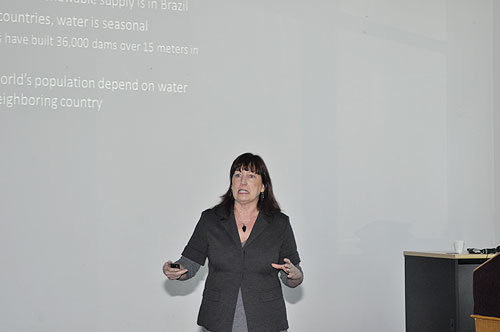
In collaboration with the AUK Social and Behavioral Sciences (SBSA) Program, the Human Rights Club at the American University of Kuwait organized a discussion entitled "Who Has a Right To Water?". The lecture was presented by Dr. Conerly Casey, Associate Professor of Anthropology in the Department of Sociology and Anthropology at the Rochester Institute of Technology.
In her discussion, Dr. Casey put forward the human rights dimension of the world water scarcity issue, stressing the urgent need to secure water to all humans, regardless of their race, social level, or financial status.
The growing scarcity of fresh water resources has recently been a subject of public debate. According to Dr. Casey, there are a number of factors contributing to this problem. Global warming has disturbed the water cycle, leading to the melting of ice sheets and waste of fresh water into the oceans. Another serious factor is the uneven distribution of shared water resources leading to disputes among countries, like the case with Jordan and Israel. In places where huge oil reserves have been discovered, water contamination due to oil spills has created health threats on local inhabitants of those areas. Drawing on examples from Nigeria, the Peruvian Amazon, the United States, and Kuwait, Dr. Casey discussed how the pollution of water and diminishing water resources has led to a growing concern about global water wars.
From the economic perspective, Dr. Casey analyzed the debate about the right to buy water on global markets, versus the position that water, a necessity for life, should be held in public trust, available to all people, regardless of their ability to pay for it.
Kuwait's high standard of living makes it on top of the world list of water consuming countries. The average water consumption in Kuwait is three times that of Europe and 1½ that of the US. This high rate of consumption is alarming. According to Dr. Casey, Kuwait comes third after Bahrain and Qatar as the highest countries vulnerable to water scarcity in the next three years.
At the end of her discussion, Dr. Casey emphasized the importance of global collaboration in facing the growing threat of water scarcity. Governments need to work together on putting and enforcing regulations on water usage and distribution. Awareness plays a key role in educating people about water conservation and ecological usage of industrial water.
The Human Rights Club at the American University of Kuwait is a student organization that seeks to spread awareness about democracy and human rights.
Released by the Office of Public Affairs on the 7th February 2012
Photography by the Office of Public Affairs (C) 2012
The Model United Nations Club at the American University of Kuwait (MUNAUK) organized a panel discussion entitled Rescuing a Nation. The discussion hosted a number of parliament candidates and took place on Wednesday, January 25th in the AUK Auditorium.
During the discussion, which was moderated by Dr. Mohamed Akbar, Assistant Professor of Communication and Media at AUK, the parliament candidates Safa Al Hashim, Adel Al Kharafi, Khaled Al Sultan, Khaled Al Salal, and Aroub Al Rifai shared their visions and approaches towards rescuing the political situation in Kuwait.
During her speech, the 3rd constituency parliament candidate, Safa Al Hashem, stressed on the importance of utilizing the potential of Kuwait's youth through micro financing and support of small projects. She also applauded the young people's interest in attending such discussion panels saying, "I am happiest when I see bright minds having a vision and a political goal toward a beautiful celebration of democracy". She concluded her speech by encouraging young people to continue participating actively in the political life and to make good choices in selecting their parliament representatives.
Taking the podium next, the 2nd constituency candidate Engineer Adel Al-Kharafi spoke about the political sensitivity of the coming period, through which people have to make conscious choices of who should represent them. Al Kharafi stressed on the role of Kuwait's youth to raise public awareness on the importance of political participation. Al Kharafi also urged young people to stick to freedom of opinion and to fight the spirit of frustration that has crept into young people's lives. At the end of his speech, Al Kharafi brought to stage two young Kuwaiti engineers who have left fingerprints at the global level, showing the ability of Kuwaiti youth to innovate.
From his side, former MP and 2nd constituency candidate Khalid Al-Sultan pointed out the positive and negative aspects of the previous parliament, considering that the last three years were full of political events and conflicts between the forces of corruption and reform. Again, Al Sultan stressed on the role of young Kuwaitis in shaping the political map in the coming period. He also endorsed the latest youth movements against corruption, media blackout, and obliteration of realities.
In his speech, candidate Khalid Al Salal, brought up the concept of national unity that was exposed to many challenges throughout history. According to Al Salal, the Iraqi invasion tried to take advantage of Kuwait's diversity to dissect people's national unity. But Kuwaitis, under danger, revealed their outstanding loyalty to their country and their unity in demand of return of legitimacy. Today, however, the concept of national unity has been compromised by many who do not realize the seriousness of this matter. Finalizing his speech, Al-Salal stressed on the criticality of the coming parliament, which should be up to the challenge of this period to save the country's future.
In consistency with the discussion on the political role of youth, Aroub Al Refai spoke about the importance of youth involvement in NGO's and voluntary work that support and monitor political activities in the country. In her opinion, the previous parliament failed, not only due to the lack of democratic ethics, but also due to the lack of social involvement and cooperation among the civil society.
About the idea of hosting this panel discussion, the President of MUNAUK, Khalid Al Mutawa, said they organized this event to provide an opportunity for Kuwaiti youth to talk with parliament candidates about the future of Kuwait. Al Mutawa commented on the event saying, "I would like to thank all candidates who participated in today's discussion. The purpose of our dialogue was to point out the most urgent political issues facing Kuwait today, focusing on the importance of making wise choices in the upcoming elections. From here came the title 'Rescuing a Nation', which reflects today's reality, a deteriorating political situation that needs rescue."
MUNAUK is a student organization that seeks to enhance leadership, communication, and debate skills among its participants. Through representing a variety of political positions in various inter-governmental organizations, a diverse student body will learn to negotiate and resolve socio-political issues and will assimilate their distinct academic backgrounds in their venture. MUNAUK strives to provide the younger generation with the tools to comprehend their international world in its past, present, and future.
Released by the Office of Public Affairs on the 30th January 2012
Photography by the Office of Public Affairs (C) 2012
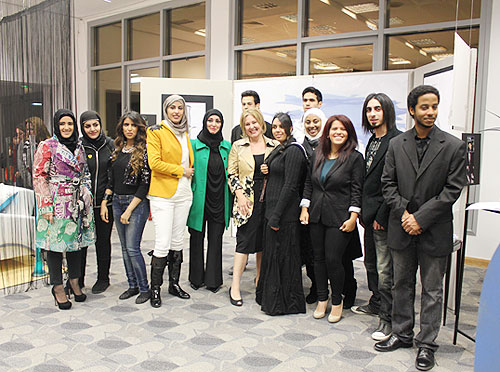
The Art & Graphic Design Program (GDES) at AUK inaugurated its Senior Capstone Exhibition on December 18. The opening ceremony was held in the Multipurpose Room at the AUK Campus in Salmiya. The exhibition ran until Dec. 21, 2011 and saw attendance by AUK students, faculty, parents, and public visitors.
The ceremony started with an opening word by Professor Marcella Kulchitsky, Assistant Professor of Graphic Design and Program Lead of GDES, followed by a tour by the AUK President Dr. Winfred Thompson, who discussed with the students their project concepts and their applications. Among the VIP visitors of the Senior Capstone Exhibition were Their Excellencies the Ambassadors of Qatar and Somalia, who visited as parents of two student participants in the exhibition.
During the opening ceremony fifteen senior students showcased and presented their graduation projects to visitors, who were impressed by the creativity of the designs and concepts. The themes of the exhibition included, but were not limited to, new business concepts, identity designs, educational/awareness projects, ideas to preserve culture along with creative ideas for personal safety and health.
Participating students will be graded based on the creativity and presentation of their projects, which reflect their ability to conduct and use graphic design research strategy effectively and efficiently; their ability to design problem solving solutions in 2D and 3D formats; and their ability to plan and implement a compelling graphic design exhibition.
The GDES Capstone course is designed to teach graduating students how to visualize the complex intersection between personal voice, conceptual understanding, and the use of research for a graphic design exhibition. The course is largely self-directed and students are expected to select and investigate a graphic design topic using design as a means to present their findings.
Released by the Office of Public Affairs on the 22nd December 2011
Photography by the Office of Public Affairs (C) 2011