



News
23, Nov 2009
AUK hosts 4th Annual Social Awareness Week
The American University of Kuwait held its 4th Annual Social Awareness Week where each day focused on a specific social awareness topic. Events surrounding the week provided students with the chance to obtain knowledge on social responsibility issues, learn to make socially responsible decisions, establish positive networks and encourage involvement with key organizations in Kuwait.
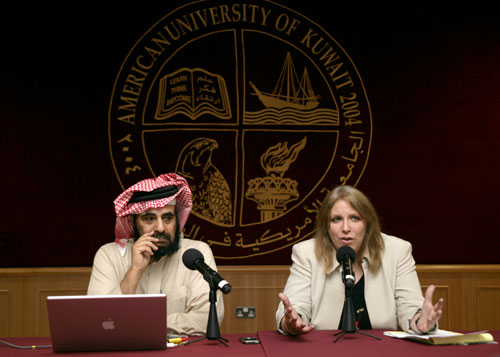
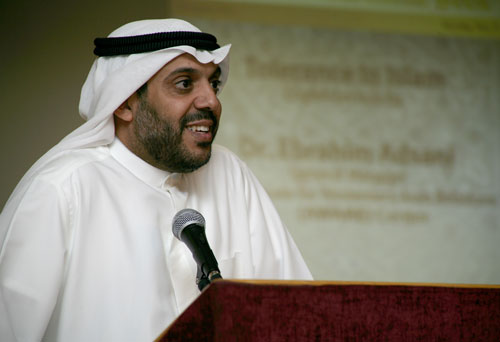
Each day concentrated on a specific social awareness topic, including; Saving our Resources Day, Tolerance Day, Human Rights Day, Hunger and Poverty Day, and Community Service Day. Dr. Ebrahim Adsani spoke about 'Tolerance in Islam' on the Occasion of Tolerance Day this English lecture held in association with the Ministry of Awqaf and Islamic Affairs - Culture Affairs Department. On the Occasion of Human Rights Day, Dr. Salah Bourjini United Nations Resident Coordinator in Kuwait gave a presentation titled "Promoting Gender Equality and Fair Labor Policies" on behalf of the United Nations Development Program. Community Service Day hosted Shell Road Safety Campaign presented by renowned Arab Formula 3 racer, and United Nations World Ambassador for Road Safety, Basil Shaaban.
The week also allowed for fundraising to be donated to the Direct Aid Society. There was also recycled hand work made by domestic workers who live in embassy shelters sold through the charity fundraiser sale.
Participation during this week included many Kuwait ministries and organizations such as, the Ministry of Electricity & Water, Environment Public Authority, Metal & Recycling Co, The Advocate for Western-Arab Relations (AWARE) Center, Zawaya - Aqsem campaign UN Development Program (UNDP), United Nations High Commissioner for Refugees(UNHCR), International Labor Organization (ILO), Kuwait Red Crescent Society- Lothan Youth Achievement Center (LOYAC), and Kuwait Association for the Care of Children in Hospital (KACCH)."
Along with the Office of Student Life, several AUK student organizations contributed to the success of Social Awareness Week including, ACM - AUK Club, Cooperation Club, Entrepreneurship and Business Club, Drama Club, Model United Nations at AUK, Drama Club, Al-Akhdar Environmental Club, Diplomatic Club, and the Marketing Club.
The Office of Student Life's mission at AUK is to create a campus environment that engages students with lifelong learning opportunities outside the classroom which provide personal, professional, ethical, and intellectual growth.
Each day concentrated on a specific social awareness topic, including; Saving our Resources Day, Tolerance Day, Human Rights Day, Hunger and Poverty Day, and Community Service Day. Dr. Ebrahim Adsani spoke about 'Tolerance in Islam' on the Occasion of Tolerance Day this English lecture held in association with the Ministry of Awqaf and Islamic Affairs - Culture Affairs Department. On the Occasion of Human Rights Day, Dr. Salah Bourjini United Nations Resident Coordinator in Kuwait gave a presentation titled "Promoting Gender Equality and Fair Labor Policies" on behalf of the United Nations Development Program. Community Service Day hosted Shell Road Safety Campaign presented by renowned Arab Formula 3 racer, and United Nations World Ambassador for Road Safety, Basil Shaaban.
The week also allowed for fundraising to be donated to the Direct Aid Society. There was also recycled hand work made by domestic workers who live in embassy shelters sold through the charity fundraiser sale.
Participation during this week included many Kuwait ministries and organizations such as, the Ministry of Electricity & Water, Environment Public Authority, Metal & Recycling Co, The Advocate for Western-Arab Relations (AWARE) Center, Zawaya - Aqsem campaign UN Development Program (UNDP), United Nations High Commissioner for Refugees(UNHCR), International Labor Organization (ILO), Kuwait Red Crescent Society- Lothan Youth Achievement Center (LOYAC), and Kuwait Association for the Care of Children in Hospital (KACCH)."
Along with the Office of Student Life, several AUK student organizations contributed to the success of Social Awareness Week including, ACM - AUK Club, Cooperation Club, Entrepreneurship and Business Club, Drama Club, Model United Nations at AUK, Drama Club, Al-Akhdar Environmental Club, Diplomatic Club, and the Marketing Club.
The Office of Student Life's mission at AUK is to create a campus environment that engages students with lifelong learning opportunities outside the classroom which provide personal, professional, ethical, and intellectual growth.
Dr. Ebrahim Adsani
Dr. Salah Bourjini
Shell Road Safety Campaign presented by renowned Arab Formula 3 racer, and United Nations World Ambassador for Road Safety, Basil Shaaban with university & Shell company officials
22, Nov 2009
Student Government Association (SGA) Add Members to their General Assembly
The American University of Kuwait's Student Government Association (SGA) has added members to their General Assembly, as the voting results have come in. The following names and positions are those who have filled in the vacant spots of the General Assembly:
SGA Secretary:
Fatma Al-Ali
Programming Officer:
Maikel George Yousef
Humanities & Arts Representative:
Khaled Al-Ajmi
Junior Representative:
Mohammad Khaled
These candidates will work in co-ordination with the Student Government Association board in order to reach the SGA goals and achievements set for this year. Last week, a meeting was held between the SGA President Abdallah Al-Sharrad and the new members for briefing and training.
SGA Secretary:
Fatma Al-Ali
Programming Officer:
Maikel George Yousef
Humanities & Arts Representative:
Khaled Al-Ajmi
Junior Representative:
Mohammad Khaled
These candidates will work in co-ordination with the Student Government Association board in order to reach the SGA goals and achievements set for this year. Last week, a meeting was held between the SGA President Abdallah Al-Sharrad and the new members for briefing and training.
Showing
10 Articles
of 1528
16, Nov 2009
Bedouin Sadu Weaving, Lecture, Workshop, and Poster Exhibit at the American University of Kuwait
The Arabian Heritage Project at the American University of Kuwait (AUK) hosted several events on Bedouin Weaving on Sunday, November 15, at 7 pm in AUK's Liberal Arts Auditorium in Salmiya.
The principle event of the day was a lecture given by Dr. Keireine Canavan, of the University of Wales, titled "Communication & Language of Textiles." The lecture explored some of the meanings, associations and experiences that all humans have been exposed to since birth. Dr. Canavan continued by saying that "cloth greets us on arrival into the world and shrouds us when we leave; in between it carries multiple personal meanings and associations throughout our lives."
This sensuous relationship has particular resonance as people recognize that textiles and related artifacts also have a multiplicity of purpose, meanings and associations within cultural society and history throughout the world, which includes utilitarian, architectural, celebratory, ritualistic and symbolic roles.
The lecture focused on how textiles communicate information on a number of different levels: through color association and recognized pattern; via uniformity and symbolism; the portrayal of culture and fashion, the desire for decoration and the conveyance of messages and religious beliefs from one to another.
Directly related to previous academic research of traditional Ikat weaving patterns and symbolism in Malaysia and India, the lecture culminated with a series of images related to the current research of Kuwait's Al Sadu weaving motifs, patterns and associated symbolism.
Weaving is one of the oldest crafts of the Arabian Peninsula, and historically, woven textiles were, arguably, the most important artifacts produced by the Bedu society of Kuwait. With traditional Arab culture under threat of change, and desert life in a state of transition due to the region''s socio-economic developments, the Bedu have lost much of their traditional status, making their craft skills less valued and meaningful, and resulting in the traditional weaving culture changing beyond recognition and driven to near extinction.
Bedu women are responsible mainly, for associated weaving traditions and historically they have verbally passed information of weaving techniques, patterns and symbolism from generation to generation, but due to the lack of formal education, little has been recorded or documented by them, although through the language of Al Sadu weaving, the textiles speak for themselves.
Dr. Keireine Canavan is Principal Lecturer and Head of the Textiles Department at the University of Wales Institute, Cardiff, UK, and DIGIT, the academic research group of WIRAD, South Wales.
As an artist, weaver and researcher, Dr. Canavan is a leading scholar of Ikat textiles, and has worked closely with Dayak weaving tribespeople in Borneo, Malaysia and Patola weavers in Gujarat, India.
Dr. Canavan is currently on a six month sabbatical from the University of Wales, and is researching the patterns and symbols of Al Sadu weaving at Sadu House, Kuwait, in collaboration with Sheikha Altaf Salem Al-Ali Al-Sabah.
Following the lecture there was an open workshop with table looms on Bedouin Weaving, led by traditional weavers. The specialist weavers at the workshop are Patricia Redding, Mutiera Mussalem, and Nawal Atira. All are chief experienced weavers from Sadu House, Kuwait, under the directorship of Sheikha Altaf Al Sabah. Modern interpretations of the evening's events were displayed in a student graphic design poster exhibit that is part of the Arabian Heritage Project Design Competition.
The Graphic Design Student Poster Competition was spirited by Prof. Maryam Hosseinnia and her Graphic Design poster classes at AUK. All photographs used in the posters were taken by the students themselves. All work was prepared from scratch and is completely original.
Graphic Design Faculty
WINNERS of the Arabian Heritage Project Poster Design Award 2009:
First Place: Nora Al-Twaijry
Second Place: Fatma Al-Qames
Third Place: Amina Al-Ezaby
Design title winner: Sara Al-Gharabally
Poster design winners
For more Information, please contact:
Arabian Heritage Project at AUK
Director, Dr. Lisa Urkevich
ArabianHeritage@auk.edu.kw
The principle event of the day was a lecture given by Dr. Keireine Canavan, of the University of Wales, titled "Communication & Language of Textiles." The lecture explored some of the meanings, associations and experiences that all humans have been exposed to since birth. Dr. Canavan continued by saying that "cloth greets us on arrival into the world and shrouds us when we leave; in between it carries multiple personal meanings and associations throughout our lives."
This sensuous relationship has particular resonance as people recognize that textiles and related artifacts also have a multiplicity of purpose, meanings and associations within cultural society and history throughout the world, which includes utilitarian, architectural, celebratory, ritualistic and symbolic roles.
The lecture focused on how textiles communicate information on a number of different levels: through color association and recognized pattern; via uniformity and symbolism; the portrayal of culture and fashion, the desire for decoration and the conveyance of messages and religious beliefs from one to another.
Directly related to previous academic research of traditional Ikat weaving patterns and symbolism in Malaysia and India, the lecture culminated with a series of images related to the current research of Kuwait's Al Sadu weaving motifs, patterns and associated symbolism.
Weaving is one of the oldest crafts of the Arabian Peninsula, and historically, woven textiles were, arguably, the most important artifacts produced by the Bedu society of Kuwait. With traditional Arab culture under threat of change, and desert life in a state of transition due to the region''s socio-economic developments, the Bedu have lost much of their traditional status, making their craft skills less valued and meaningful, and resulting in the traditional weaving culture changing beyond recognition and driven to near extinction.
Bedu women are responsible mainly, for associated weaving traditions and historically they have verbally passed information of weaving techniques, patterns and symbolism from generation to generation, but due to the lack of formal education, little has been recorded or documented by them, although through the language of Al Sadu weaving, the textiles speak for themselves.
Dr. Keireine Canavan is Principal Lecturer and Head of the Textiles Department at the University of Wales Institute, Cardiff, UK, and DIGIT, the academic research group of WIRAD, South Wales.
As an artist, weaver and researcher, Dr. Canavan is a leading scholar of Ikat textiles, and has worked closely with Dayak weaving tribespeople in Borneo, Malaysia and Patola weavers in Gujarat, India.
Dr. Canavan is currently on a six month sabbatical from the University of Wales, and is researching the patterns and symbols of Al Sadu weaving at Sadu House, Kuwait, in collaboration with Sheikha Altaf Salem Al-Ali Al-Sabah.
Following the lecture there was an open workshop with table looms on Bedouin Weaving, led by traditional weavers. The specialist weavers at the workshop are Patricia Redding, Mutiera Mussalem, and Nawal Atira. All are chief experienced weavers from Sadu House, Kuwait, under the directorship of Sheikha Altaf Al Sabah. Modern interpretations of the evening's events were displayed in a student graphic design poster exhibit that is part of the Arabian Heritage Project Design Competition.
The Graphic Design Student Poster Competition was spirited by Prof. Maryam Hosseinnia and her Graphic Design poster classes at AUK. All photographs used in the posters were taken by the students themselves. All work was prepared from scratch and is completely original.
Graphic Design Faculty
WINNERS of the Arabian Heritage Project Poster Design Award 2009:
First Place: Nora Al-Twaijry
Second Place: Fatma Al-Qames
Third Place: Amina Al-Ezaby
Design title winner: Sara Al-Gharabally
Poster design winners
For more Information, please contact:
Arabian Heritage Project at AUK
Director, Dr. Lisa Urkevich
ArabianHeritage@auk.edu.kw
Dr. Keireine Canavan
Guest trying loom
Graphic Design Faculty
Poster design winners
16, Nov 2009
Human Rights Day at AUK
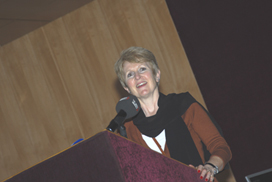
As part of its 4th Annual Social Awareness Week, the Office of Student Life at AUK hosted UN Resident Coordinator in Kuwait Dr. Salah Bourjini on the occasion of Human Rights Day. This lecture is part of a series held during Social Awareness Week whereby everyday is dedicated to a subjected matter that is universally socially relevant. The Topics include Save Our Resources Day, Tolerance Day, Human Rights Day, Hunger and Poverty Day and finally Community Service Day.
The lecture began with a history of the United Nations as a whole and the many specialized agencies that came to be, including one of the most important agencies dealing with sustainable Human Development, the UNDP, which is represented in 166 countries. Dr. Bourjini then focused on the history and role of the UNDP stating that, "It is important to mention that UNDP is working in almost all parts of the world in the out posts of the development fronts and at all national levels, regional and global dealing especially with important areas as in the fight against poverty, dealing with climate change and achieving equality between the sexes."
Dr. Bourjini then narrowed his attention to human development in the Arab world naming the various obstacles in the face of development in this region. Dr. Bourjini continued by saying, "There are enormous challenges facing Arab Countries today, they must find a way to improve their situation. There is a need to define priorities, scope and tools for improving and enhancing development."
Some experts have retained seven dimensions of threat to the Arab Region, these are:
The lecture began with a history of the United Nations as a whole and the many specialized agencies that came to be, including one of the most important agencies dealing with sustainable Human Development, the UNDP, which is represented in 166 countries. Dr. Bourjini then focused on the history and role of the UNDP stating that, "It is important to mention that UNDP is working in almost all parts of the world in the out posts of the development fronts and at all national levels, regional and global dealing especially with important areas as in the fight against poverty, dealing with climate change and achieving equality between the sexes."
Dr. Bourjini then narrowed his attention to human development in the Arab world naming the various obstacles in the face of development in this region. Dr. Bourjini continued by saying, "There are enormous challenges facing Arab Countries today, they must find a way to improve their situation. There is a need to define priorities, scope and tools for improving and enhancing development."
Some experts have retained seven dimensions of threat to the Arab Region, these are:
- People and their insecure environment include: demographic pressures, water scarcity, desertification, pollution and climate change.
- The state and its insecure people: Citizenship, adherence to international charters, problem of Human Rights, constitutional falling, legal restrictions of political parties, obstruction of justice.
- Violence against women
- High unemployment and persisting poverty
- Hunger and food insecurity
- Health security
- Occupations and wars: (Palestine and Iraq)
09, Nov 2009
Dartmouth-AUK Music Recital: A Universal Language
The Music Program at the American University of Kuwait (AUK) and Dartmouth College, one of the premiere Ivy League universities in the USA, presented a collaborative music recital on Sunday, November 1, at 7pm in the AUK Auditorium Liberal Arts Building, Salmiya Campus.
Students, faculty, and staff from both distinguished institutions performed vocal and instrumental solo and chamber works, demonstrating the great potential for future cultural collaboration between Dartmouth and AUK. Featured compositions included works of Brahms, Mozart, Rachmaninov, and Rimsky-Korsakov. Anna Karadimitrova, Elena Tsenkova, and Dagmara Bienias and their gifted students from Kuwait-- Sara Soliman (flute), Khaled Abdel Ghaffar (guitar), and Faisal Al Bahairi--performed alongside Dartmouth musicians Mathew Forman and Laurel Stavis.
Mathew, a Dartmouth Intern at AUK who is a singer and trombonist, said, "Not only was the recital a great performing experience, it was a privilege to participate in this unique collaboration between Dartmouth and AUK. Music is certainly the appropriate medium for such a collaboration to occur, and this event confirms the universal appeal and unifying power of music."
Laurel Stavis, Executive Director of the Dartmouth-AUK Project and a trained mezzo-soprano (a graduate of the New England Conservatory of Music) added, "Dartmouth's relationship with AUK is based on the notion that education is a universal human aspiration. Music taps into our common experience at a similarly profound level. I can think of nothing more rewarding than sharing that experience with colleagues and students at AUK, and I am grateful to Professor Lisa Urkevich, the Director of the Music Program, for providing such a wonderful opportunity."
Students, faculty, and staff from both distinguished institutions performed vocal and instrumental solo and chamber works, demonstrating the great potential for future cultural collaboration between Dartmouth and AUK. Featured compositions included works of Brahms, Mozart, Rachmaninov, and Rimsky-Korsakov. Anna Karadimitrova, Elena Tsenkova, and Dagmara Bienias and their gifted students from Kuwait-- Sara Soliman (flute), Khaled Abdel Ghaffar (guitar), and Faisal Al Bahairi--performed alongside Dartmouth musicians Mathew Forman and Laurel Stavis.
Mathew, a Dartmouth Intern at AUK who is a singer and trombonist, said, "Not only was the recital a great performing experience, it was a privilege to participate in this unique collaboration between Dartmouth and AUK. Music is certainly the appropriate medium for such a collaboration to occur, and this event confirms the universal appeal and unifying power of music."
Laurel Stavis, Executive Director of the Dartmouth-AUK Project and a trained mezzo-soprano (a graduate of the New England Conservatory of Music) added, "Dartmouth's relationship with AUK is based on the notion that education is a universal human aspiration. Music taps into our common experience at a similarly profound level. I can think of nothing more rewarding than sharing that experience with colleagues and students at AUK, and I am grateful to Professor Lisa Urkevich, the Director of the Music Program, for providing such a wonderful opportunity."
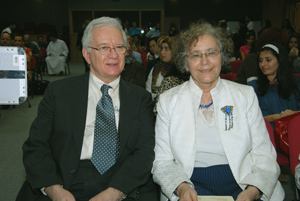
Dr. Dale Eickelman, Relationship Coordinator, Dartmouth-AUK Project, and Dr. Marina Tolmacheva, President of AUK
Group Photo: Back Row (left to right): Dr. Lisa Urkevich, Director of the Music Program and the Arabian Heritage Project; Dr. Tim Sullivan, Interim President of AUK; Dr. Dale Eickelman, Relationship Coordinator, Dartmouth-AUK Project; Dr. Nizar Hamzeh, Dean of the College of Arts and Sciences, AUK; Dr. Marina Tolmacheva, President of AUK; Elena Tsenkova, piano; Anna Karadimitrova, soprano; Laurel Stavis, Executive Director of Dartmouth-AUK Project and mezzo-soprano; Dagmara Bienias, flute
Front Row (left to right): Charlie Dameron, Dartmouth-AUK Intern;
Matthew Forman, Dartmouth-AUK Intern and trombone; Faisal al-Bahairi, piano; Khaled Abdel Ghaffar, guitar; Sara Soliman, flute
Front Row (left to right): Charlie Dameron, Dartmouth-AUK Intern;
Matthew Forman, Dartmouth-AUK Intern and trombone; Faisal al-Bahairi, piano; Khaled Abdel Ghaffar, guitar; Sara Soliman, flute
Director of the Music Program and the Arabian Heriage Project - Dr. Lisa Urkevich
02, Nov 2009
Pink Week at AUK
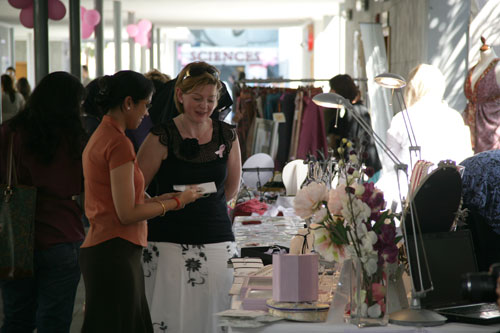
The Student Success Center at the American University of Kuwait sponsored the 2nd Annual Pink Week to raise awareness for Breast Cancer, one of the most common forms of cancer. The AUK campus and offices were decorated in pink, and emails and brochures were distributed to students, staff, and faculty with information on prevention and early detection of Breast Cancer. Students, clinics and companies also participated in the week by selling clothes, jewelry, and decorative items on campus as well as offering informational materials to our Community. Part of the money from the week of sales was donated to Breast Cancer research.
Currently 1 out of every 8 women develop Breast Cancer, but women can reduce their chances of developing Breast Cancer through regular exercise, balanced diet, not smoking tobacco and not inhaling the smoke of others. Breast Cancer is more easily treated when discovered during the early stages, so monthly self exams and yearly mammograms save lives. While often thought of as a women's problem, men are also affected by the disease. While some men are diagnosed with Breast Cancer, others are effected when their mother, wife, or sister is diagnosed.
Companies that participated in promoting the awareness of this important health issue and raised money for breast cancer researchinclude: Al Zuhair Medical Center, Girl Power, BELLE, Optivision, Feryal Designs, Silkeri, Swissa Beauty Sensation, Little hooker handbag hook, Miglio Jewelry, Petite Card, Desert Diamonds, Agatha Silks, JoJo's, and Little Bali.
Photos of some of the participants in the Pink Week.
Currently 1 out of every 8 women develop Breast Cancer, but women can reduce their chances of developing Breast Cancer through regular exercise, balanced diet, not smoking tobacco and not inhaling the smoke of others. Breast Cancer is more easily treated when discovered during the early stages, so monthly self exams and yearly mammograms save lives. While often thought of as a women's problem, men are also affected by the disease. While some men are diagnosed with Breast Cancer, others are effected when their mother, wife, or sister is diagnosed.
Companies that participated in promoting the awareness of this important health issue and raised money for breast cancer researchinclude: Al Zuhair Medical Center, Girl Power, BELLE, Optivision, Feryal Designs, Silkeri, Swissa Beauty Sensation, Little hooker handbag hook, Miglio Jewelry, Petite Card, Desert Diamonds, Agatha Silks, JoJo's, and Little Bali.
Photos of some of the participants in the Pink Week.

28, Oct 2009
The Turbulent Gulf and the GCC
The former Secretary-General of the Gulf Cooperation Council (GCC) and Kuwaiti representative to the United Nations, Ambassador Abdullah Bishara, told a public audience at the American University of Kuwait (AUK) on Sunday, October 25, 2009, that the GCC could achieve "glory" through policies of moderation aimed at defeating religious fundamentalism and mitigating Iranian influence in the Gulf. Bishara's lecture, entitled "The Turbulent Gulf and the GCC," was sponsored by AUK's Gulf Studies Center and attended by members of the general public and the diplomatic corps, in addition to AUK faculty, staff, and students.
Focusing his twenty-five minute address on the twin historical challenges of Iraq and Iran, Bishara sought to assess the GCC's overall legacy in achieving its goals; Bishara claimed that "in the final outcome...we have pan-Arabism, radicalism, fundamentalism on the run," and hailed a "triumph of moderation" in the region. The GCC's first Secretary-General, from its inception in 1981 until 1993, Bishara described the GCC as a "status quo power," and spoke of the GCC's continuing mission to "build a wall against disorder flowing from Tehran and Baghdad." Weighing the Council's "profits and losses," Bishara said that the Arab Gulf states have ably "preserved the order of the Gulf," and made wise use of their wealth, creating an island of political and economic stability in the Middle East. Bishara cited this stability, based on the dependability, trustworthiness, and confidence of the region's governments and economies, as an essential precondition for the GCC's engineering of "the internationalization of the Gulf."
After critiquing the GCC's slow pace in fostering good governance and democratization, describing its deliberative process as "too cautious, too reluctant," Bishara nevertheless marveled at the GCC's rapid response in 1990 and 1991 to the Iraqi invasion of Kuwait. "During the Kuwait occupation, I saw a different catalog of traits" from the Gulf leaders, Bishara said. In that crisis, Bishara saw "an amazing coalition of determination, wealth, credibility, reliability, and friendship."
During a question-and-answer session following the lecture, Bishara warned of the grave risk posed by a nuclear Iran to the GCC's mission, noting that such a development "would tip the balance of power" and "impact the regional order so dear to the GCC," and advocated region-wide "Programs of Enlightenment" in religious re-education to combat "the curse of fanaticism."
Focusing his twenty-five minute address on the twin historical challenges of Iraq and Iran, Bishara sought to assess the GCC's overall legacy in achieving its goals; Bishara claimed that "in the final outcome...we have pan-Arabism, radicalism, fundamentalism on the run," and hailed a "triumph of moderation" in the region. The GCC's first Secretary-General, from its inception in 1981 until 1993, Bishara described the GCC as a "status quo power," and spoke of the GCC's continuing mission to "build a wall against disorder flowing from Tehran and Baghdad." Weighing the Council's "profits and losses," Bishara said that the Arab Gulf states have ably "preserved the order of the Gulf," and made wise use of their wealth, creating an island of political and economic stability in the Middle East. Bishara cited this stability, based on the dependability, trustworthiness, and confidence of the region's governments and economies, as an essential precondition for the GCC's engineering of "the internationalization of the Gulf."
After critiquing the GCC's slow pace in fostering good governance and democratization, describing its deliberative process as "too cautious, too reluctant," Bishara nevertheless marveled at the GCC's rapid response in 1990 and 1991 to the Iraqi invasion of Kuwait. "During the Kuwait occupation, I saw a different catalog of traits" from the Gulf leaders, Bishara said. In that crisis, Bishara saw "an amazing coalition of determination, wealth, credibility, reliability, and friendship."
During a question-and-answer session following the lecture, Bishara warned of the grave risk posed by a nuclear Iran to the GCC's mission, noting that such a development "would tip the balance of power" and "impact the regional order so dear to the GCC," and advocated region-wide "Programs of Enlightenment" in religious re-education to combat "the curse of fanaticism."
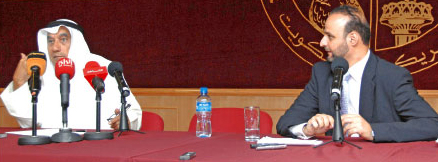
The former Secretary-General of the Gulf Cooperation Council (GCC) and Kuwaiti representative to the United Nations, Ambassador Abdullah Bishara with the Director of the Gulf Studies Center & Associate Professor of History and International Studies, Dr. Hesham Al-Awadi
The former Secretary-General of the Gulf Cooperation Council (GCC) and Kuwaiti representative to the United Nations, Ambassador Abdullah Bishara
26, Oct 2009
AUK Commends Exemplary Students
In celebration of AUK student's academic achievements, a ceremony was held on Thursday, October 22nd, 2009 at the Liberal Arts Auditorium where recipients of the President's Honor Roll and Dean's list shared their joy with faculty, staff and parents.
An unprecedented 303 students were awarded by the Dean of the College of Arts and Sciences Dr. Nizar Hamzeh for being on the Dean's List, which requires students to maintain a minimum 3.5 GPA. The President's Honor Roll saw 47 recipients awarded by AUK President Dr. Marina Tolmacheva. These exemplary students must maintain a 4.0 GPA to be eligible for this honor.
Spring 2009 President's Honor Roll
Abdelwahab Al-Atiqi
Abdul-Azeez Habib
Abdulla Al Wohaib
Abdullah Al-Shames
Abdulwahab Al-Sharaf
Afnan Abdullah
Alaa El-Khatib
Ali Majed
Amena El-Ezaby
Amineh Eida
Ascia Farraj
Dana Al-Failakawi
Dina El-Zohairy
Fatemah Boukhadour
Fatima Al-Sughayer
Fatima Ibraheem
Fatma Al-Fadhli
Fatma Al-Qames
Iman Zariwala
Isha Haider
Kawthar Abdullah
Kawther Sadeq
Laila Al-Daghestani
Mays Naser
Mejren Al-Hammadi
Mohammad Al-Wuqayyan
Nada Bedir
Norah Al-Hilaly
Nour El-Shamsy
Noura Al-Suwalem
Nourin Tajani
Nuha Al-Fadli
Nur Soliman
Omar El-Khatib
Omar Mehdi
Rana Emera
Rasha Abdelhadi
Rasha Al-Najjar
Sakineh Fakher
Sally Saleh
Sanaa Turky
Sara Al-Terkait
Shahad Bin-Salamah
Shaza Abdelazim
Tarek Al-Azem
Wael El-Ahmady
Wafaa Okasha
Spring 2009 Dean's List
Abdelrahman Abuzaid
Abdel-Rahman El-Farra
Abdelwahab Al-Atiqi
Abdul-Azeez Habib
Abdulaziz Almuslem
Abdulaziz Al-Sammar
Abdulaziz Al-Mudhaf
AbdulAziz Al-Mutairi
Abdulaziz Al-Hagan
Abdulla Murad
Abdulla Al Wohaib
Abdullah Naqi
Abdullah Al-Shaikh
Abdullah Al-Shames
Abdulrahman Aman
Abdulrahman Al-Essa
Abdulrahman Al-Duaij
Abdulrahman Al-Farhan
Abdulrahman Al-Hoti
Abdulwahab Al-Sharaf
Abdur Chowdhury
Adam Lary
Adel Abdul Hussein
Afnan Abdullah
Ahmad Al-Homaidi
Ahmad Youssef
Ahmad Al-Enezi
Ahmed El-Sayed
Ahmed Ben Awadh
Ahmed Dimachkie
Alaa Al-Rashed
Alaa Al-Zamel
Alaa Basha
Alaa El-Khatib
Al-Anood Al-Othman
Ali Taqi
Ali Al-Tukhaim
Ali Atesh
Ali Majed
Alia Aref
Alia Al-Shatti
Altaf Mairza
Alyaa Al-Nafisi
Amena El-Ezaby
Amina Al-Hubail
Amina Al-Anssari
Amineh Eida
Ammar Al-Refai
Anfal Al-Shammari
Ascia Farraj
Aseel Al-Abed
Ashod Kuyumjian
Athba Al-Nusif
Bader Al-Jadei
Bader Al-Shemari
Baraah Al-Marouf
Batool Akhand
Dalal Al-Sabah
Dalal Al-Sharhan
Dalal Al-Muhawes
Dalal Al-Enizi
Dalal Al-Mukaimi
Dalia Al-Awadhi
Dana Abu Mejdad
Dana Al-Failakawi
Danah Jbara
Dareen Swar Al-Thahab
Deema Al-Kandery
Dharey Ali
Dina El-Zohairy
Emad Salamah
Esraa Al-Shammari
Fadel Al-Sabah
Fahad Al-Refai
Fahad Hamid
Faisal Al-Ghusain
Faisal Al-Mutawaa
Faisal Mohammad
Fajer Bouarki
Fakheema Badri
Farah Al-Saqlawi
Farah Al Qallaf
Farah Zainal
Farah Khneijer
Fares Al-Shatti
Faris Fayrouz
Fatema Al-Matrouk
Fatemah Al-Sabah
Fatemah Boukhadour
Fatemeh Dadkhah
Fatima Sakit
Fatima Al-Khalaf
Fatima Al-Sughayer
Fatima Ibraheem
Fatma Abdulghafour
Fatma Mohamad
Fatma Al-Fadhli
Fatma Al-Qames
Feras El-Husari
Foud Al-Bahar
Ghadeer Sarab
Ghadeer Al-Mirza
Ghadeer Nema
Ghaneema Al-Qudmani
Hadaya Al-Othman
Hadeel Al-Musallam
Hadi Sarieddine
Hamad Al-Kharraz
Haneen Abdulaziz
Hani Ghalayini
Haya Al-Nassar
Haya Al-Sabah
Heba Mansour
Heba Rashwan
Hiba Bazzi
Hussain Taha
Hussain Akbar
Ibrahim Taha
Iman Zariwala
Isha Haider
Ismail Abu-Abdo
Jackleen Shaanin
Jarrah Al-Sabah
Jida Cheikh Amin
Jomana Mustafawi
Jumana Al-Jasim
Kawthar Jamal
Kawthar Abdullah
Kawther Sadeq
Khaled Al-Ajmi
Khaled Abdel Ghaffar
Khaled Al-Jassar
Khaled Elchammaa
Khalid Al-Attrash
Khalid Al-Omar
Laila Al-Daghestani
Lama Ahmed
Lamees Nijem
Lamia Al-Salahi
Laura Boulos
Leen Taha
Leila May Al-Methen
Lolwah Al-Rashed
Lujain AbuZaid
Lulwa Boushahri
Maen Awais
Maha Yousef
Mahy Tawfik
Manal Al-Jtaili
Manal Zeidan
Manar Al-Murad
Manar Salman
Manwa Al-Yaqoub
Marahib Al-Sabah
Marhab Al-Loghani
Mariam El-Temtamy
Mariam Sultan
Mariam Behbehani
Mariam Mairza
Maryam Al-Naserallah
Mashael Eissa
May Khafash
May Younes
Mayda Al-Arabi
Mays Naser
Mejren Al-Hammadi
Mennatallah Abdul-Hamid
Meshari Al-Muhaini
Milad Kaeid
Modi Al-Mohareb
Mohamed Ismail
Mohamed Fargoun
Mohammad Al-Aradi
Mohammad Al-Saqer
Mohammad Al-Sulaiman
Mohammad Al-Wuqayyan
Mohammed Al-Fares
Mohammed Al-Sabah
Mohammed Hasan
Mona Al-Sharrah
Moneba Iqbal
Monica Matta
Mubarak Al-Enezi
Mubarak Al-Mubarak
Mubarak Al-Marri
Muhannad Darwish
Nada Bedir
Nadia Al-Fadhli
Nadia Sammour
Nardeen Al-Alawy
Narjes Al-Kazemi
Nawaf Al-Ajmi
Nivine Al-Ayash
Noha Aoun
Noof Al-Muzaini
Noor Hallak
Noor Kortom
Noor Al-Baghli
Nora Al-Twaijry
Norah Al-Hilaly
Nour Al-Sharrah
Nour El-Shamsy
Noura Al-Sharhan
Noura Al-Baijan
Noura Al-Sager
Noura Al-Ajmi
Noura Al-Suwalem
Nouria Al-Sabah
Nourin Tajani
Nuha Al-Fadli
Nur Soliman
Omar Alabduljader
Omar El-Khatib
Omar Mehdi
Omnia Abdelhalim
Perihan Al-Tanani
Rahma Al-Mishwat
Rana Sakkijha
Rana Al-Najjar
Rana Manssour
Rana Abdelhamid
Rana Emera
Rand Dannan
Rania Shaker
Ranyah Alenezi
Rasha Al-Jabi
Rasha Abdelhadi
Rasha Al-Najjar
Rawan Al-Tarkit
Rawan Al-Sughayer
Razan Al-Asqah
Reem Al-Huwaidi
Reem Al-Wazzan
Reem Habib
Reem Shuhaibar
Reham Ibrahim
Sabikah Al-Ayyoubi
Sadaf Elyassi-Bakhtiyari
Safaa AbdulHamid
Safaa Khalil
Sahar Tanweer
Sakineh Fakher
Saleh Al Ojeiri
Salem Al-Jandal
Salem Belal
Sally Nassar
Sally Saleh
Salma Al-Mishwat
Salman Al-Saffar
Sanaa Turky
Sara Al-Fouzan
Sara Al-Gharabally
Sara Qaddoura
Sara Al-Terkait
Sarah Al-Weqayyan
Sarah Al-Mejreb
Sarah Al-Qadire
Sarah Juma
Sarah Al-Sharhan
Sarah Sebzali
Sarah Al-Rifaai
Sarah Mobasher
Sepideh Behbehani
Shaha Al-Mufarrij
Shaha Al-Obaid
Shaha Al-Khaddah
Shahad Al-Harban
Shahad Bin-Salamah
Shahed Al-Wadani
Shahed Al-Tammar
Shaikha Al-Saeed
Shaikha Al-Kandari
Shaza Ayesh
Shaza Abdelazim
Sherif Mohammed
Shimaa Hassan
Shorouq Al-Qabandi
Slaiman Anbar
Sohaila Hasan
Sulaiman Al-Bader
Sulaiman Al-Sahu
Sundos Al-Mutawaa
Taiba Al-Zaabi
Taiba Al-Humaidhi
Talal Al Sager
Talal Al-Mutawaa
Talal Al-Saddi
Talal Al-Yaseen
Tarek Al-Azem
Tasnim Ramsorwala
Violla Bader
Wadha Al-Hunaidi
Wael El-Ahmady
Wafaa Okasha
Walah Al-Sabah
Yousef Ali
Yousef Al-Raqhas
Zahabiya Gunj
Zahra Al-Abdeen
Zahra`a Ashkanani
Zakaria Al-Ansari
Ziba Ebrahimi
Zienab Hussain
An unprecedented 303 students were awarded by the Dean of the College of Arts and Sciences Dr. Nizar Hamzeh for being on the Dean's List, which requires students to maintain a minimum 3.5 GPA. The President's Honor Roll saw 47 recipients awarded by AUK President Dr. Marina Tolmacheva. These exemplary students must maintain a 4.0 GPA to be eligible for this honor.
Spring 2009 President's Honor Roll
Abdelwahab Al-Atiqi
Abdul-Azeez Habib
Abdulla Al Wohaib
Abdullah Al-Shames
Abdulwahab Al-Sharaf
Afnan Abdullah
Alaa El-Khatib
Ali Majed
Amena El-Ezaby
Amineh Eida
Ascia Farraj
Dana Al-Failakawi
Dina El-Zohairy
Fatemah Boukhadour
Fatima Al-Sughayer
Fatima Ibraheem
Fatma Al-Fadhli
Fatma Al-Qames
Iman Zariwala
Isha Haider
Kawthar Abdullah
Kawther Sadeq
Laila Al-Daghestani
Mays Naser
Mejren Al-Hammadi
Mohammad Al-Wuqayyan
Nada Bedir
Norah Al-Hilaly
Nour El-Shamsy
Noura Al-Suwalem
Nourin Tajani
Nuha Al-Fadli
Nur Soliman
Omar El-Khatib
Omar Mehdi
Rana Emera
Rasha Abdelhadi
Rasha Al-Najjar
Sakineh Fakher
Sally Saleh
Sanaa Turky
Sara Al-Terkait
Shahad Bin-Salamah
Shaza Abdelazim
Tarek Al-Azem
Wael El-Ahmady
Wafaa Okasha
Spring 2009 Dean's List
Abdelrahman Abuzaid
Abdel-Rahman El-Farra
Abdelwahab Al-Atiqi
Abdul-Azeez Habib
Abdulaziz Almuslem
Abdulaziz Al-Sammar
Abdulaziz Al-Mudhaf
AbdulAziz Al-Mutairi
Abdulaziz Al-Hagan
Abdulla Murad
Abdulla Al Wohaib
Abdullah Naqi
Abdullah Al-Shaikh
Abdullah Al-Shames
Abdulrahman Aman
Abdulrahman Al-Essa
Abdulrahman Al-Duaij
Abdulrahman Al-Farhan
Abdulrahman Al-Hoti
Abdulwahab Al-Sharaf
Abdur Chowdhury
Adam Lary
Adel Abdul Hussein
Afnan Abdullah
Ahmad Al-Homaidi
Ahmad Youssef
Ahmad Al-Enezi
Ahmed El-Sayed
Ahmed Ben Awadh
Ahmed Dimachkie
Alaa Al-Rashed
Alaa Al-Zamel
Alaa Basha
Alaa El-Khatib
Al-Anood Al-Othman
Ali Taqi
Ali Al-Tukhaim
Ali Atesh
Ali Majed
Alia Aref
Alia Al-Shatti
Altaf Mairza
Alyaa Al-Nafisi
Amena El-Ezaby
Amina Al-Hubail
Amina Al-Anssari
Amineh Eida
Ammar Al-Refai
Anfal Al-Shammari
Ascia Farraj
Aseel Al-Abed
Ashod Kuyumjian
Athba Al-Nusif
Bader Al-Jadei
Bader Al-Shemari
Baraah Al-Marouf
Batool Akhand
Dalal Al-Sabah
Dalal Al-Sharhan
Dalal Al-Muhawes
Dalal Al-Enizi
Dalal Al-Mukaimi
Dalia Al-Awadhi
Dana Abu Mejdad
Dana Al-Failakawi
Danah Jbara
Dareen Swar Al-Thahab
Deema Al-Kandery
Dharey Ali
Dina El-Zohairy
Emad Salamah
Esraa Al-Shammari
Fadel Al-Sabah
Fahad Al-Refai
Fahad Hamid
Faisal Al-Ghusain
Faisal Al-Mutawaa
Faisal Mohammad
Fajer Bouarki
Fakheema Badri
Farah Al-Saqlawi
Farah Al Qallaf
Farah Zainal
Farah Khneijer
Fares Al-Shatti
Faris Fayrouz
Fatema Al-Matrouk
Fatemah Al-Sabah
Fatemah Boukhadour
Fatemeh Dadkhah
Fatima Sakit
Fatima Al-Khalaf
Fatima Al-Sughayer
Fatima Ibraheem
Fatma Abdulghafour
Fatma Mohamad
Fatma Al-Fadhli
Fatma Al-Qames
Feras El-Husari
Foud Al-Bahar
Ghadeer Sarab
Ghadeer Al-Mirza
Ghadeer Nema
Ghaneema Al-Qudmani
Hadaya Al-Othman
Hadeel Al-Musallam
Hadi Sarieddine
Hamad Al-Kharraz
Haneen Abdulaziz
Hani Ghalayini
Haya Al-Nassar
Haya Al-Sabah
Heba Mansour
Heba Rashwan
Hiba Bazzi
Hussain Taha
Hussain Akbar
Ibrahim Taha
Iman Zariwala
Isha Haider
Ismail Abu-Abdo
Jackleen Shaanin
Jarrah Al-Sabah
Jida Cheikh Amin
Jomana Mustafawi
Jumana Al-Jasim
Kawthar Jamal
Kawthar Abdullah
Kawther Sadeq
Khaled Al-Ajmi
Khaled Abdel Ghaffar
Khaled Al-Jassar
Khaled Elchammaa
Khalid Al-Attrash
Khalid Al-Omar
Laila Al-Daghestani
Lama Ahmed
Lamees Nijem
Lamia Al-Salahi
Laura Boulos
Leen Taha
Leila May Al-Methen
Lolwah Al-Rashed
Lujain AbuZaid
Lulwa Boushahri
Maen Awais
Maha Yousef
Mahy Tawfik
Manal Al-Jtaili
Manal Zeidan
Manar Al-Murad
Manar Salman
Manwa Al-Yaqoub
Marahib Al-Sabah
Marhab Al-Loghani
Mariam El-Temtamy
Mariam Sultan
Mariam Behbehani
Mariam Mairza
Maryam Al-Naserallah
Mashael Eissa
May Khafash
May Younes
Mayda Al-Arabi
Mays Naser
Mejren Al-Hammadi
Mennatallah Abdul-Hamid
Meshari Al-Muhaini
Milad Kaeid
Modi Al-Mohareb
Mohamed Ismail
Mohamed Fargoun
Mohammad Al-Aradi
Mohammad Al-Saqer
Mohammad Al-Sulaiman
Mohammad Al-Wuqayyan
Mohammed Al-Fares
Mohammed Al-Sabah
Mohammed Hasan
Mona Al-Sharrah
Moneba Iqbal
Monica Matta
Mubarak Al-Enezi
Mubarak Al-Mubarak
Mubarak Al-Marri
Muhannad Darwish
Nada Bedir
Nadia Al-Fadhli
Nadia Sammour
Nardeen Al-Alawy
Narjes Al-Kazemi
Nawaf Al-Ajmi
Nivine Al-Ayash
Noha Aoun
Noof Al-Muzaini
Noor Hallak
Noor Kortom
Noor Al-Baghli
Nora Al-Twaijry
Norah Al-Hilaly
Nour Al-Sharrah
Nour El-Shamsy
Noura Al-Sharhan
Noura Al-Baijan
Noura Al-Sager
Noura Al-Ajmi
Noura Al-Suwalem
Nouria Al-Sabah
Nourin Tajani
Nuha Al-Fadli
Nur Soliman
Omar Alabduljader
Omar El-Khatib
Omar Mehdi
Omnia Abdelhalim
Perihan Al-Tanani
Rahma Al-Mishwat
Rana Sakkijha
Rana Al-Najjar
Rana Manssour
Rana Abdelhamid
Rana Emera
Rand Dannan
Rania Shaker
Ranyah Alenezi
Rasha Al-Jabi
Rasha Abdelhadi
Rasha Al-Najjar
Rawan Al-Tarkit
Rawan Al-Sughayer
Razan Al-Asqah
Reem Al-Huwaidi
Reem Al-Wazzan
Reem Habib
Reem Shuhaibar
Reham Ibrahim
Sabikah Al-Ayyoubi
Sadaf Elyassi-Bakhtiyari
Safaa AbdulHamid
Safaa Khalil
Sahar Tanweer
Sakineh Fakher
Saleh Al Ojeiri
Salem Al-Jandal
Salem Belal
Sally Nassar
Sally Saleh
Salma Al-Mishwat
Salman Al-Saffar
Sanaa Turky
Sara Al-Fouzan
Sara Al-Gharabally
Sara Qaddoura
Sara Al-Terkait
Sarah Al-Weqayyan
Sarah Al-Mejreb
Sarah Al-Qadire
Sarah Juma
Sarah Al-Sharhan
Sarah Sebzali
Sarah Al-Rifaai
Sarah Mobasher
Sepideh Behbehani
Shaha Al-Mufarrij
Shaha Al-Obaid
Shaha Al-Khaddah
Shahad Al-Harban
Shahad Bin-Salamah
Shahed Al-Wadani
Shahed Al-Tammar
Shaikha Al-Saeed
Shaikha Al-Kandari
Shaza Ayesh
Shaza Abdelazim
Sherif Mohammed
Shimaa Hassan
Shorouq Al-Qabandi
Slaiman Anbar
Sohaila Hasan
Sulaiman Al-Bader
Sulaiman Al-Sahu
Sundos Al-Mutawaa
Taiba Al-Zaabi
Taiba Al-Humaidhi
Talal Al Sager
Talal Al-Mutawaa
Talal Al-Saddi
Talal Al-Yaseen
Tarek Al-Azem
Tasnim Ramsorwala
Violla Bader
Wadha Al-Hunaidi
Wael El-Ahmady
Wafaa Okasha
Walah Al-Sabah
Yousef Ali
Yousef Al-Raqhas
Zahabiya Gunj
Zahra Al-Abdeen
Zahra`a Ashkanani
Zakaria Al-Ansari
Ziba Ebrahimi
Zienab Hussain
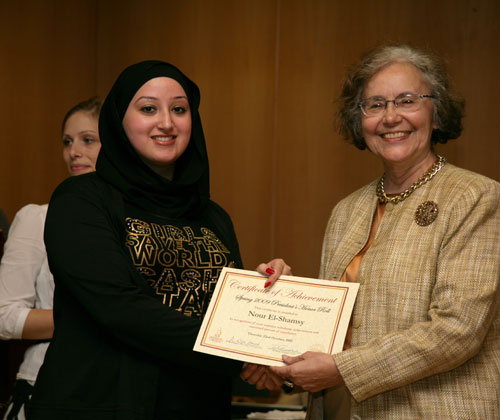
Nour Al Shamsy Receives her certificate from Dr. Marina Tolmacheva
Maen Awais receives his certificate from Dr. Nizar Hamzeh
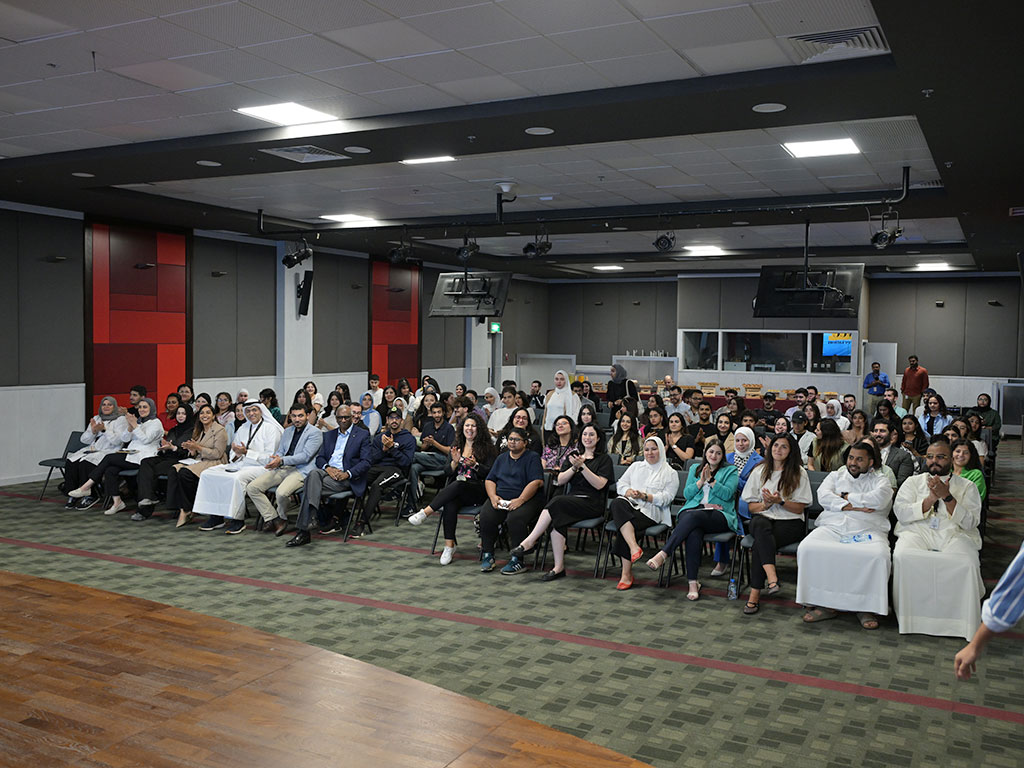
A view of the audience
20, Oct 2009
Bedouin Oral Traditions: An Open Forum with Dr. Saad Sowayan
AUK's Arabian Heritage Project hosted world-renowned Saudi Folklore scholar Dr. Saad Sowayan, Professor at King Saud University in Riyadh on Tuesday October 13. Dr. Sowayan is the author of multiple articles and books on the oral literature and spoken language of Arabian nomads, including Nabati Poetry: The Oral History of Arabia (1985), and The Arabian Oral Historical Narrative (1992). He welcomed the large audience, opening his talk with musical examples of Najdi Bedouins, including ancient samri (night music) and songs of the cameleers and horsemen. As he answered the many questions about Bedouin life of the past, Dr. Sowayan shared his wealth of knowledge, including the important role of women (some tribes even had female Sheiks), and the complexity of his research. Dr. Sowayan is delighted with AUK's new Arabian Heritage Project and will continue to interact closely with the center through publications and research.
Dr. Lisa Urkevich presents the speaker
Dr. Saad Sowayan
A view of the audience